
Mistake Amnesia
My new method of living a more enjoyable improv life

I’ve been trying something that will probably horrify a group of people. I’ve been doing my best to develop “mistake amnesia”.
I do my best to be a modest chap, but there is something I will brag about for a second here: I’m one of the world’s best at beating myself up after a show. I’m really good at it. It can be a show that has had huge plaudits, but I will find a way to pick apart my own performance and give every other player the credit except myself. It’s a considerable skill, and if I were able to monetise it, I’d make far more money from teaching you how to beat yourself up than I ever will from teaching improv.
However, I’ve tried doing something different recently. After I was in a really good show last year, I beat myself up as my internal narrative was that I was the weak player in the set. A few weeks later I was thinking about how much worse I view these shows over time, so I tried to shift my thinking. After every show I now find one think I liked that I did, something great that my fellow players did and then go home and think about what sort of shows I want to do in the future.
That’s it.
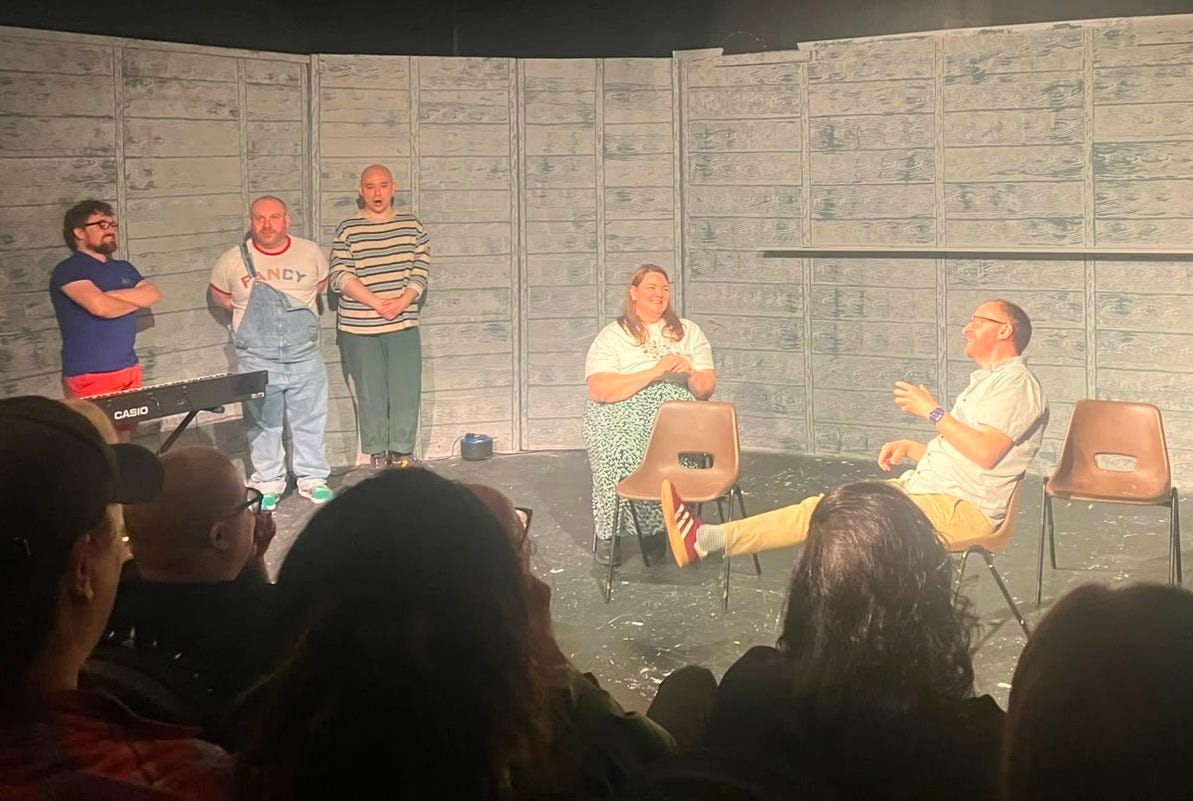
No hypnosis, no big revisiting of things and playing it out in my mind and no phrases like “oh but I should have…”
The idea is that I’m just not allowed to remember my the things I’ve done that I didn’t like. So often, when they come from within the show, they aren’t useful. When the show is over, it’s over. It won’t happen again. However, I’m dreadful at letting go of things.
This has taken a while to perfect, but for me this has led to a much happier improv life. I get to digest one thing that I did that I liked. I just need one thing. Doesn’t need to be a big thing, just a move I made that I enjoyed in the show. Holding onto that and digesting it is great. I get to enjoy my improv life so much more when I can just sit with something I know I can do. I like to make contributions in life so feeling that I contributed a good thing really helps with that sense of self. I’m also far more likely to make similar moves in future shows if I give some positive reinforcement to myself. I then think about my fellow players, remember how much I like playing with them and then leave the show behind.
However, the big trick I play on myself is thinking about the sort of shows I want to play next. This seems to trick my brain into imagining great shows in the future and that feels pretty good. It gives me a future focus rather than looking back.
And then I go about the rest of my life.
I realise some people will feel like a show needs to be analysed so you can do better. There’s value to that. I’d much rather do that work in the rehearsal room than I would straight after a performance. I’m down to make mistakes when I’m practicing and being coached.
So that’s where I’ve got myself to. Will it work for you? I don’t know but if you try it out I’d love to know what results you get. Do you do something different that works for you? I’d love to know that too. Either way, jump into the comments.
Other things…
This week, Kornfeld and Andrews: The Radio Plays is sees a guru dispense advice at the end of a retreat. Listen here but that’s not all. Rick and Louis recorded several of their final shows together at The Magnet Theater before Rick moved to Amsterdam. They just released the first one and it’s well worth your time.
Finally, there have been some incredible insights in the comments in recent weeks. Huge thanks to everyone who has engaged with my weekly random thoughts. It’s been really interesting to get your perspective on it.
Have a great week!
Lloydie
I recently was at a Living Room jam and was so focused on telling my own story that I didn't connect to what was going on in the scene. To me this was a valuable insight in remembering basic improv "rules" even when you've been doing improv for awhile.
That's a great approach, and it ties back to what you wrote about Specific Compliments a few months ago. Giving a specific compliment to your fellow players helps them work through their own process of amnesia. And they can help you.